WHO REALLY PROTECTS JAMAICA? GANG VIOLENCE, THE PNP, THE GUN LAW AND THE PEOPLE WHO DESERVE ANSWERS

By ExDetective Chris Porter | Jamaican Young Police | Long-form investigative commentary
The question Jamaica must confront
An important measure of success is whether families displaced by violence can return to normal life. When homes burn or residents flee threats, emergency shelter is only the beginning. Children may miss school, parents may lose employment, and older residents can lose access to medicines and familiar support. Any serious public-safety programme must include safe housing, trauma services, assistance with lost documents and a credible plan to prevent renewed intimidation. Counting arrests while ignoring displaced families measures only part of the harm caused by gangs.
What does it mean when political leaders say they stand with ordinary Jamaicans? It cannot mean merely appearing on a campaign platform, visiting a community during an election, or promising to be tough on crime. The test is whether their decisions help people travel to school, earn a living, sleep peacefully and report wrongdoing without fear. Jamaica should measure every party against that test.
This investigation examines the opposition People's National Party and the public argument over mandatory firearm sentences. It is not a declaration that every PNP supporter is involved in crime, or that disagreement over sentencing proves sympathy for gunmen. Such allegations require evidence. Rather, it is a demand for specific answers about laws, enforcement, community protection and political responsibility.
After decades of painful gun violence, families deserve policies that work. They also deserve a politics in which one side cannot claim exclusive ownership of morality and the other side cannot escape serious questions by dismissing all criticism as partisan. Our standards should not change with the colour of a shirt.
The Jamaica I know, and the human beings behind the statistics
Witness protection is another practical test. Residents may know who carried out an attack yet reasonably fear retaliation if they speak. It is irresponsible to demand courage from witnesses without offering confidential, sustained safeguards for their families. Prosecutors, police and victim advocates need reliable resources that continue after a particular case stops attracting headlines. A society cannot build successful prosecutions if witnesses believe they will be abandoned. Elected representatives should explain what improvements they have supported and how their effectiveness is measured.
I speak as someone who grew up in Jones Town and Concrete Jungle and served in the Jamaica Constabulary Force. Those names are not abstractions. They evoke neighbours, shopkeepers, churches, schools and families determined to build something better. I also know the anxiety that spreads when criminal groups seize control of streets and begin dictating where people may go and what they may say.
A killing is not simply a number on a scoreboard. It is a child losing a parent, a mother returning to an empty room, a witness deciding whether it is safe to speak, and a neighbourhood forced to confront grief alongside fear. When public officials debate sentencing, they should remember the people whose lives are affected long after the parliamentary speeches end.
Nor should anyone say gangs are all that Black Jamaicans own. That is plainly untrue and demeans the achievements of generations. Our people have built businesses, farms, homes, schools, music, charities, professional careers and institutions. The gang does not represent the community: too often, the gang is the force preventing the community from flourishing.
When a young man is recruited into an armed group, we should ask what criminal organisers have done to exploit him, what opportunities he lacked, and what help might have changed the outcome. Those questions do not excuse his conduct. They allow society to protect the next child while bringing the person responsible for violence before a lawful court.

Photograph: Mark Golding — leader of the opposition. Editorial illustration only; inclusion does not imply criminal wrongdoing.
How gangs destroy freedom and opportunity
Legislators should distinguish firearm possession, trafficking, threats, robbery and murder rather than describing all offences as identical. A mandatory minimum raises different questions depending on what conduct is covered, whether the offender has previous convictions, what was proved in court, and whether a judge may recognise exceptional circumstances. Constitutional justice and public safety should both be part of the analysis. Responsible lawmakers ought to publish precise proposed wording instead of leaving citizens to debate rumours about what a future amendment might permit.
A gang may first present itself as a provider of protection. It might settle a quarrel or offer money to a household in difficulty. But protection is not real when the same armed group decides who may trade, who may enter a lane, who must hand over earnings and who must remain silent after a killing. That is domination, not community leadership.
Extortion empties small businesses. Threats discourage witnesses. Armed rivalries shut schools, interrupt transportation and force families to abandon their homes. Children learn to avoid ordinary places because of territorial boundaries they did not create. Residents stop trusting police or public institutions when cooperation carries genuine risk.
The result is a cycle of damaged opportunity. Entrepreneurs hesitate to invest. Employers struggle to operate. Talented young people look for a path out rather than a reason to remain. Families who stay must rebuild after each fresh eruption of violence. A political movement that claims to love communities must provide measurable plans to interrupt that cycle.
That means more than speeches about crime. It means credible witness protection, investigations aimed at the people financing and supplying guns, safeguards against police corruption, effective prosecution, rehabilitation where appropriate, and long-term support for communities harmed by violence.
A major decline in murders: what it tells us, and what it does not
Illegal firearms reach communities through networks of suppliers, intermediaries, couriers and financiers. Public discussion should pay greater attention to where those weapons originate, how they are transported and who earns money from their sale. Tracing weapons, examining money flows and disrupting trafficking networks require professional intelligence, international cooperation and corruption safeguards. The public deserves statistics about the networks dismantled and cases concluded, not only photographs of seized guns. A visible enforcement success must be connected to a lasting reduction in harm.
Jamaica experienced a major reduction in murders during 2025, and reported figures for 2026 indicated further improvement. For the people who have watched a country endure tragedy after tragedy, that decline is meaningful. Lower murder totals represent a possibility of more families returning home safely and more communities enjoying ordinary life.
But we must be precise when explaining the causes. A drop in murder does not by itself prove that a single statute produced the whole improvement. Intelligence-led policing, arrests of dangerous offenders, weapons seizures, changes within criminal networks, community cooperation, social conditions and enforcement tactics may all contribute. Independent evaluation is essential.
A responsible government should publish comparable data: killings by parish, firearm offences charged, convictions, sentencing patterns, repeat offending, witness intimidation, gang-related incidents and the operation of firearms licensing controls. The public should know not simply whether a number went down, but why analysts believe it changed and whether the improvement is sustainable.
People should be allowed to celebrate progress without surrendering scrutiny. A law can be effective in some respects and still require amendments in others. Conversely, the existence of hard cases does not demonstrate that the entire system should be weakened. Evidence should guide both conclusions.
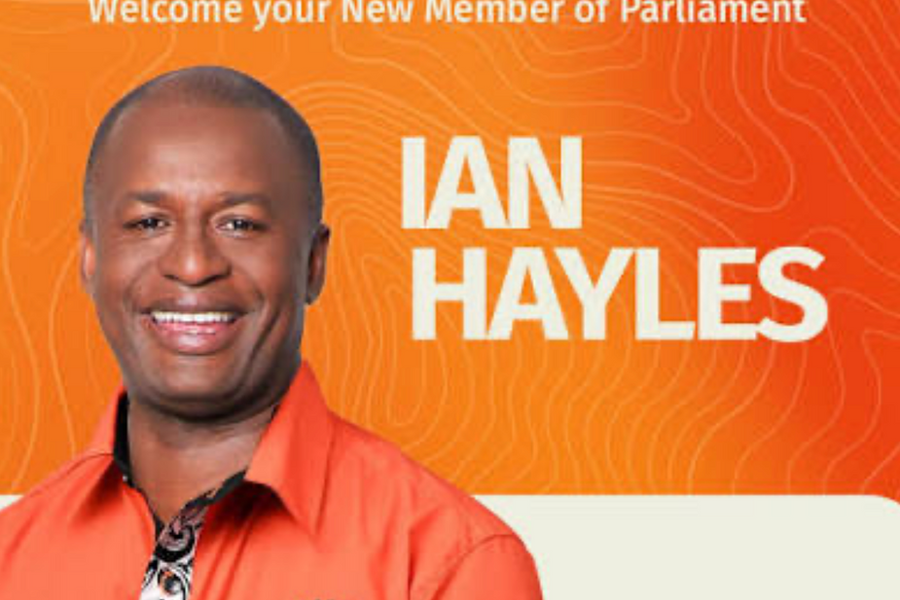
Photograph: Ian Hayles — Jamaican political figure. Editorial illustration only; inclusion does not imply criminal wrongdoing.
Michael Manley's Gun Court and the long history of the gun-law debate
Political leaders should explain what follows their condolence visits to grieving households. Public sympathy can be genuine and valuable, but communities deserve a commitment that lasts beyond a camera appearance. Months later, has the family received the assistance it needs? Is the street safer? Have investigators had adequate support? Have residents been consulted about the particular dangers they face? Those questions should be directed to politicians from every party. Families should never become props in a competition for sympathy.
In 1974, Prime Minister Michael Manley's government introduced the Gun Court against a backdrop of serious public concern about firearms and violent crime. That history complicates any simplistic claim that one party has always favoured strong sanctions and the other has always opposed them.
The modern debate concerns provisions of the Firearms Act, including mandatory minimum sentences applying to specified firearm offences. Lawyers and some opposition representatives have argued that sentencing rules can be too rigid when judges cannot distinguish adequately between individual circumstances. Supporters of mandatory terms argue that clear, substantial penalties can strengthen deterrence and public confidence.
Neither position can be assessed fairly by substituting insults for analysis. The questions are whether the provision is constitutionally sound, whether the penalty fits the offence, whether sentencing is consistent, and whether the law produces measurable improvements in safety. Those questions require more than a political party's press release.
A person who opposes a mandatory sentence is not therefore campaigning for murderers to walk free. A person who favours strict sentences is not therefore indifferent to constitutional rights. A democracy must be able to debate both justice and security without inventing motives that have not been proven.
Questions for Mark Golding and PNP representatives
Journalists and commentators must also accept accountability. An inflammatory headline is not a substitute for an authenticated record. The fact that a claim is repeated does not make it true, and a photograph showing two people together does not establish criminal cooperation. Good reporting requires interviews, timelines, documents, corrections and an opportunity for response. Audiences can help by asking which facts have been verified and which remain contested. Consistent standards matter most when an accusation concerns someone a commentator already dislikes.
Opposition Leader Mark Golding and those in the PNP advocating sentencing changes should explain exactly which sections they want amended, the alternatives they propose, and the safeguards they would maintain. Would their suggested system impose strong penalties on serious offenders while allowing judges flexibility in exceptional cases? What empirical evidence supports that approach?
The party should also explain its programme for communities facing extortion, illegal guns, gang recruitment and witness intimidation. What funding would be committed? What measurable targets would apply? What public reporting would allow residents to evaluate the results? Constituents should not have to guess whether a political promise became a practical protection.
These questions are particularly urgent to people who have lived in neighbourhoods where gang leaders sometimes have more immediate power than elected representatives. Citizens can respectfully demand answers from the people who seek to represent them, and they should also distinguish failures of policy from unproven accusations of criminal involvement.
Photographs of political figures accompanying this article identify people connected to public debate. A person's appearance here does not imply involvement in a crime. Where specific allegations arise, they must be independently corroborated and the people accused must have an opportunity to respond.

Photograph: Jess — justice policy debate. Editorial illustration only; inclusion does not imply criminal wrongdoing.
Questions for Prime Minister Andrew Holness and the Government
Honest police officers deserve adequate equipment, professional training and effective leadership. They also need institutions willing to investigate corruption wherever it appears. Citizens require reliable complaint procedures and confidence that wrongdoing is not concealed to protect an organisation's reputation. Strong policing and police accountability are not competing ambitions: each supports the other. Communities that believe their reports will be treated fairly are better placed to provide evidence, assist investigations and work toward a safer country.
The Prime Minister and his government must answer equally hard questions. How many prosecutions have resulted in convictions under the relevant firearms provisions? What evidence connects particular sentencing rules to deterrence or reduced reoffending? What proportion of cases raise concerns about proportionality or judicial discretion?
Government leaders should explain how they are protecting witnesses and reducing the flow of illegal guns into communities. They should show how the police, prosecutors, courts and correctional institutions are being resourced. If officials believe the laws work, they should be prepared to demonstrate that claim with transparent statistics.
Reviewing a law does not automatically mean surrendering to criminals, just as retaining a law does not automatically prove that every provision is effective. Leadership means protecting public safety while remaining willing to correct demonstrated injustice. Those objectives can exist together, and both should be visible in the final legislation.
Jamaica should ask its governing party and opposition the same question: what evidence will you provide, what protections will you preserve, and how will ordinary people measure your results one year and five years from now?
The duty of lawyers, police officers and journalists
Young Jamaicans deserve to be described as more than potential gang recruits. Many are studying, caring for relatives, learning trades and founding enterprises despite difficult circumstances. When programmes are developed for them, their own voices should matter. Mentorship, apprenticeships, sport, creative opportunities and counselling can help strengthen pathways away from criminal recruitment, but these programmes must be reliably funded and independently assessed. We should celebrate achievement and responsibility rather than allow gang violence to define an entire generation.
Defence lawyers are required to protect legal rights, including the rights of people accused of serious offences. That work does not mean they endorse the alleged conduct of their clients. In a lawful society, reliable convictions depend on proper investigations, admissible evidence, effective prosecution and fair hearings.
Police officers must uphold the law without regard to political favour. Allegations of bribery, falsified reports or improperly influenced firearm licensing deserve serious independent investigation, with proper protection for witnesses and procedural fairness for everyone involved.
Journalists must apply verification standards even when a claim suits their personal political preferences. A rumour repeated hundreds of times does not become a fact. A photograph of somebody speaking to a public figure does not establish criminal collaboration. Reporting should carefully separate eyewitness evidence, hearsay, documents, official findings and commentary.
If we weaken those standards, we make it easier for actual wrongdoing to escape accountability. Credible investigations are strengthened by dates, documents, interviews, official records, competing explanations and a clear trail showing how conclusions were reached.

Photograph: Isat Buchanan — Jamaican attorney. Editorial illustration only; inclusion does not imply criminal wrongdoing.
The responsibility to the next generation
A community's small businesses are particularly vulnerable to extortion and disruption. Shop owners need safety, customers, predictable transport and confidence that their savings will not be seized by armed groups. If threats force businesses to close early or abandon an area, the economic damage persists long after gunfire stops. Better public safety should therefore show up not just in murder statistics but also in school attendance, employment, investment and the freedom to travel. Those measures can help determine whether reforms are succeeding.
The Jamaican child deserves more than a warning to stay away from gangs. Children need excellent schools, safe ways to travel, reliable adult mentors, sport, music, meaningful training and employment prospects. Many families are already working hard to provide these things in difficult circumstances.
Violent offenders must face lawful consequences, but prosecution alone cannot replace a comprehensive strategy for preventing gang recruitment. Community services, mental health support, witness confidence, family stability and meaningful economic opportunity are part of sustainable public safety.
Real prevention also includes refusing to glorify the gunman as a hero. Fearful respect for armed power must not be confused with admiration. The people worthy of celebration are those who help a young person complete an education, create an honest job, protect a vulnerable neighbour or stand up against intimidation.
Jamaica's musicians, teachers, tradespeople, entrepreneurs, police officers, healthcare workers, farmers and young professionals show how much our people can achieve. Their contributions are the opposite of the destructive economy of gangs.
An accountability test for every MP
Finally, every citizen can insist on a single standard of evidence. When a politician is accused, demand verifiable facts. When a law is challenged, examine the text and the arguments. When a police officer faces an allegation, respect both investigation and due process. Political loyalty must never excuse proven wrongdoing, but political dislike must never replace proof. Jamaica will be stronger when fairness survives changes in government and when the right to live safely is recognised as a shared national responsibility.
Let every Member of Parliament publish a clear account of their voting record, proposed laws, constituency work, public-safety priorities and measurable outcomes. Let representatives identify practical steps taken to reduce gang recruitment and support victims, not only announcements made at ceremonies.
Ask whether proposals include reliable budget estimates and implementation deadlines. Ask whether lawmakers have consulted families who lost loved ones, alongside legal professionals and constitutional experts. Ask how progress will be reported to the public. Political accountability becomes meaningful when residents can check the answers.
No lawmaker should escape examination because of party loyalty. Nor should political differences be treated as evidence of criminal intent. The standard must remain conduct, records and verified outcomes. That is the only way a culture of accountability survives changes of government.

Photograph: Mikael Phillips — Jamaican political figure. Editorial illustration only; inclusion does not imply criminal wrongdoing.
The Jamaica we must insist upon
I want a country where a mother can send her child to school without wondering whether a gunman will enter the street. I want a shopkeeper to earn a living without extortion. I want a witness to tell the truth without being abandoned. I want police officers equipped and supervised to do honest investigations, and courts trusted to deliver fair justice.
That future depends on citizens refusing to normalise violence or surrender their critical thinking to political slogans. We should neither romanticise criminal power nor assume that every legal controversy has a secret criminal motive. Both habits distract from real evidence and practical solutions.
To every elected official: do not ask citizens for blind loyalty. Show your plans, disclose your evidence, listen to victims and explain your decisions. To every Jamaican: never allow a party colour to become more important than an innocent human life.
We can disagree about particular laws and still agree that children deserve safe communities, victims deserve justice, accused people deserve lawful trials and public servants must be held accountable. That shared commitment should be the standard by which all politicians are judged.
I am ExDetective Chris Porter. Substance Over Popularity. Data is King. Informer fi live. You watch, you listen, and you decide!
Jamaican Young Police public channel: (954) 556-0275 | https://www.jamaicanyoungpolice.com
Editorial note: Facts, allegations, policy arguments and opinions are distinguished in this commentary. Claims of criminal wrongdoing require corroboration.


Comments