
WARMINGTON VS. MARK GOLDING: IS JAMAICA'S OPPOSITION LEADERSHIP FAILING THE TEST?

By Ex-Detective Chris Porter | Jamaican Young Police | Political commentary and historical analysis
A critical examination of Mark Golding's Opposition leadership, Everald Warmington, parliamentary discipline, and the legacy of Tony Spaulding in South St. Andrew.
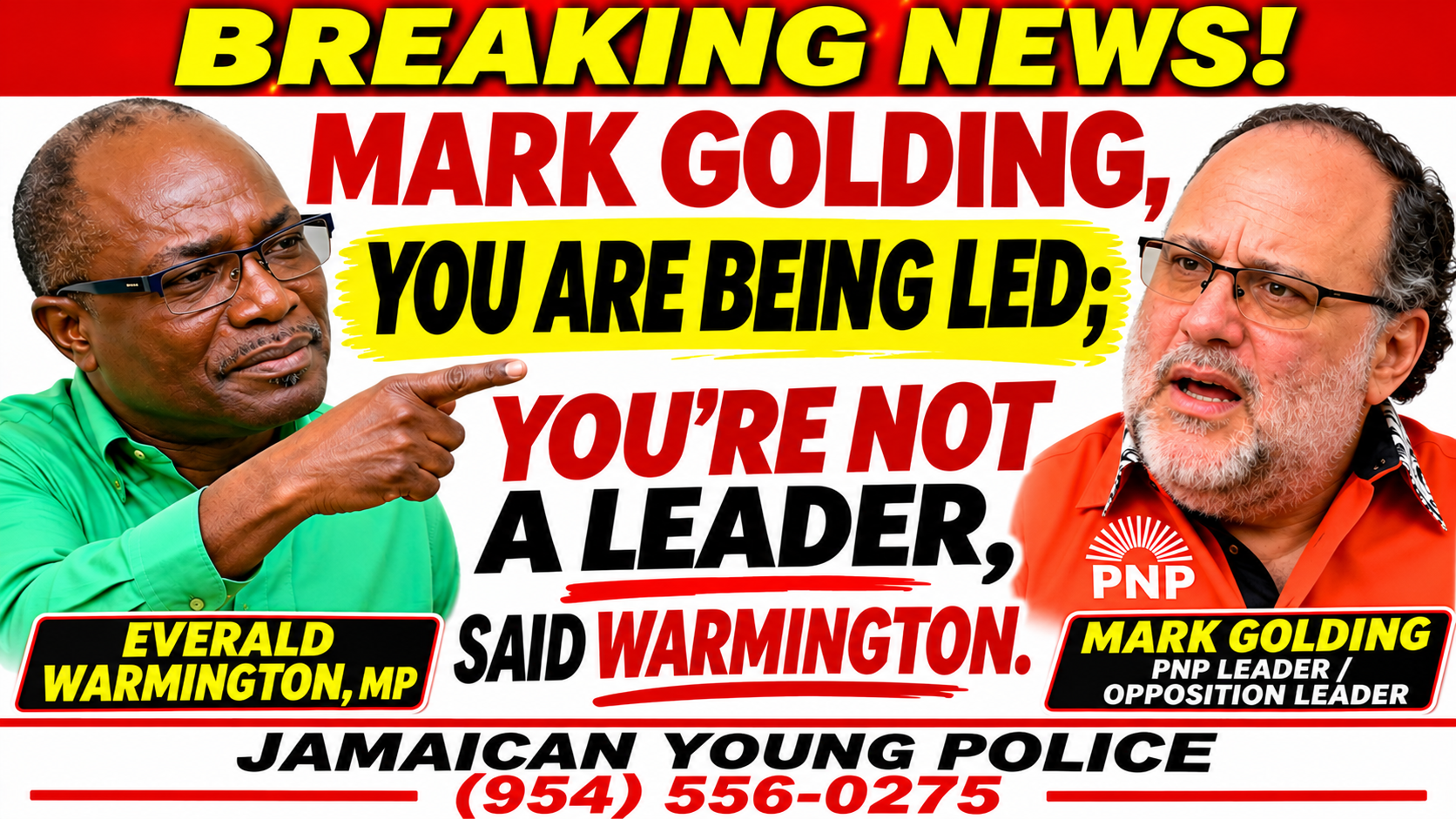
Parliament Must Be a Place of Leadership, Not Chaos
Jamaica's Parliament is the institution where representatives argue over laws, public spending, security and our future. Argument is necessary in a democracy; intimidation and disorder are not. Recent controversy surrounding Opposition Leader Mark Golding, government MP Everald Warmington, Speaker Juliet Holness and other parliamentarians raises a fundamental question: are our political leaders setting an example that young Jamaicans should follow? This article is an editorial companion to the Jamaican Young Police video linked below, not a verbatim transcript. The original recording was not available for full transcription during preparation.
The Warmington–Golding Confrontation
Everald Warmington and Mark Golding represent opposing political parties and frequently express strongly different views. Their public disputes should be evaluated by what each man actually said and did, not by party loyalty. Warmington has himself faced public criticism for inflammatory remarks, including race-related comments about Golding. That history matters: the standards we demand of the Opposition must also apply to the Government. Strong questions about Golding's judgment can be raised without making his ancestry or complexion a test of eligibility for political leadership.
What Does Opposition Leadership Require?
An Opposition leader is not supposed to approve every government policy. Scrutiny is a constitutional necessity. But effective scrutiny also requires discipline, factual precision and a credible alternative program. It should be possible to question a Speaker's ruling, to challenge the government and to insist upon fair procedure without degrading Parliament. When confrontations dominate the headlines, citizens are entitled to ask whether their representatives are defending parliamentary principles or allowing political theatre to overshadow serious national business.
Juliet Holness and Respect for the Speaker's Office
The Speaker of the House holds an institutional office that deserves respect, regardless of which party occupies the chair. That does not make every ruling immune from challenge. Parliamentary rules and decisions should remain open to principled objection and review. The November 2026 parliamentary controversies involving Speaker Juliet Holness and Opposition members deserve careful examination of the original video and procedural record. Political responsibility must be assessed from verified actions, not assumptions about private motives.

Tony Spaulding, South St. Andrew and the Weight of History
The late Anthony “Tony” Spaulding represented South St. Andrew, the constituency now represented by Mark Golding. Reports of Spaulding's past parliamentary disorder provide an evocative historical comparison. Yet history should not be flattened: different individuals, different circumstances and different proceedings do not establish that two incidents are identical. The precise year and words attributed to Spaulding in the current commentary should be checked against contemporaneous parliamentary records before being presented as direct quotations.
From Jones Town and Concrete Jungle: Why the Stakes Are Personal
Chris Porter, host of Jamaican Young Police, has spoken of being born in Jones Town and raised in Concrete Jungle, Kingston 12, and of serving for many years in the Jamaica Constabulary Force. That perspective informs the warning at the center of this discussion: political hostility has consequences beyond the parliamentary chamber. Communities that have experienced gang violence, fear and division need leaders who lower the temperature while holding firmly to law and accountability. No political disagreement justifies intimidation, threats or violence.
Is Mark Golding Jamaica's Worst Opposition Leader?
Calling Golding the worst Opposition leader in Jamaica's history is a forceful political opinion, not a settled historical finding. To substantiate such a ranking, one would have to compare his performance with many earlier Opposition leaders across parliamentary effectiveness, policy alternatives, public confidence and institutional conduct. Viewers are entitled to agree or disagree. A stronger civic test is whether Golding's actions, and those of his critics, demonstrate the judgment, civility, competence and commitment to constitutional democracy demanded of national leaders.
A Standard for Every Party
Neither the People's National Party nor the Jamaica Labour Party should receive a free pass. Government representatives must be accountable when they make inflammatory statements. Opposition representatives must be accountable when their conduct falls short. Jamaicans should demand evidence before accepting claims about a politician's secret intentions or supposed desire to provoke national conflict. Vigorous disagreement is part of democracy; deliberate efforts to inflame violence are not.
Watch the Original Presentation and Decide
The featured Jamaican Young Police video is embedded below. Watch the presentation in full and evaluate its footage, arguments and historical comparisons in their proper context. Add your perspective in the comments: What should parliamentary discipline look like? How can Jamaica's elected representatives disagree without making enemies of each other? What qualities should an Opposition leader demonstrate? DATA IS KING. GIVE ME THE BOOK AND NOT THE GUN. INFORMER FI LIVE. YOU WATCH, YOU LISTEN, AND YOU DECIDE!
Watch directly on YouTube: https://youtu.be/TmDVHuobWLM
Editorial note: This is an opinion article developed from the present series context and public reporting; it is not a line-by-line account of the supplied recording. Statements regarding motive, race, citizenship and alleged misconduct should not be understood as findings of fact.
Comments