FITZ JACKSON, TWO FALLEN OFFICERS, AND JAMAICA’S ACCOUNTABILITY TEST: DATA MUST COME FIRST

By Ex-Detective Chris Porter | Jamaican Young Police | Special Commentary | October 28, 2026
Jamaica is being asked to confront two truths at once: gunmen and organized criminal networks endanger families and police officers, and every exercise of state power must remain accountable under law. These truths are not enemies. The question in this editorial is whether our national leaders, including Opposition Spokesperson on National Security Fitz Jackson, are willing to speak about both with equal clarity.
This article accompanies the Jamaican Young Police video linked below. It examines publicly reported statements and events, but it is not represented as a verified transcript of every word spoken in the recording. Where the commentary offers an opinion, that opinion is attributed to Ex-Detective Chris Porter; allegations are not presented as findings of fact.
Watch the full Jamaican Young Police commentary
If the embedded player is unavailable on your device, watch at https://youtu.be/RjKUmD8paUI
The terrible human cost of Sligoville
On October 16, 2026, violence in the Five Miles area of Sligoville, St. Catherine, ended in tragedy. Corporal Trevoy Shaw and Constable Devoney Rose died after being shot during a police operation. A child was also wounded. No political argument should begin by treating these people as mere statistics in a debate over national security. Families lost men they loved; colleagues lost their partners; a wounded child and her family faced an ordeal no innocent person should ever endure.
Prime Minister Andrew Holness publicly described the officers as heroes and said police had been confronted by a calculated trap. News reports attributed details of the incident to the police. Those are serious accounts, and they should be carefully examined through available evidence, ballistics, witness statements, operational records, and independent review. Whatever the eventual findings about each sequence of events, the basic fact of the officers’ deaths is a national wound. An honest public response begins with compassion, an insistence on facts, and a determination that the same mistakes should never be repeated.
Remember the names, not only the headlines
Corporal Trevoy Shaw and Constable Devoney Rose must remain at the center of this discussion. An officer who reports for duty does not know whether a routine assignment will become his last. People who have never served can easily debate tactics in a comfortable studio, but the person at the scene may have seconds to distinguish a frightened civilian from a deadly threat. That is precisely why training, disciplined command, appropriate equipment, and reliable intelligence matter so much.
The tribute these officers deserve is larger than applause. Their loved ones should receive sustained care, truthful information, and a thorough account of the operation. Fellow officers need the freedom to report safety concerns and discuss lessons without being branded disloyal. Policymakers must fund the difficult work of reform rather than appearing only when television cameras arrive. Respect for officers is made real through practical protections for the men and women who protect the public.
What Fitz Jackson actually said
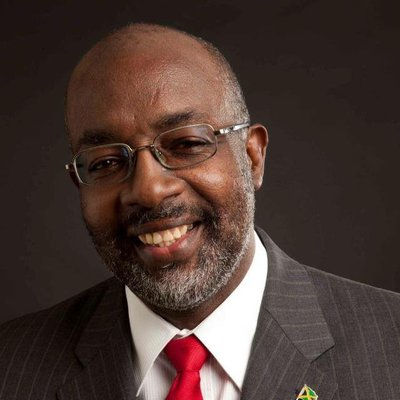
Public reporting documents that Fitz Jackson criticized the scale of fatal shootings by security forces in remarks reported in August 2026. He argued that the police should apprehend suspects and that courts should determine criminal guilt. That is a legitimate constitutional principle. It does not follow that every dangerous encounter can be resolved without defensive force; officers have a lawful right to defend themselves and others when a threat justifies it. The challenge for political leadership is to explain both principles without reducing either to a slogan.
After Sligoville, Jackson also publicly expressed condolences to the families of the two officers and their colleagues, voiced concern for the injured child, and urged cooperation against gun violence. These statements are part of the record and must not be erased because an editorial disagrees with his earlier emphasis or rhetoric. Criticism can be forceful while still quoting a public figure fairly. To accuse someone of endorsing murders or defending gunmen requires specific evidence beyond the fact that the person raised questions about police use of force.
A harder question about political responsibility
My concern, as Ex-Detective Chris Porter, is about priorities and the message that communities hear. When politicians devote significant attention to fatalities in police encounters, they should also speak plainly about the armed gangs that terrorize neighborhoods, recruit children, collect extortion money, and force peaceful people into silence. People living under criminal control want to know whether those seeking office can name that evil, confront its financing, protect witnesses, and support officers who act lawfully. Those are reasonable questions for every political party.
But the standard must be applied consistently. A politician who calls for an independent investigation is not thereby a friend of criminal gangs; equally, a politician who praises the police cannot escape questions about bad tactics, misconduct, or preventable civilian harm. One must assess the actual policy, the actual statements, and the evidence of implementation. We should reject the easy temptation to turn every disagreement into a declaration that the other side is evil. Public safety requires more than that.
The essential distinction: violent criminality and lawful criticism
Gunmen who terrorize citizens, assault officers, and use vulnerable people as cover should be investigated, arrested, and prosecuted to the fullest extent of the law. Their actions deserve unambiguous condemnation. They are not heroes or romantic rebels. They destroy the opportunities of children, close shops through intimidation, make witnesses afraid, and leave ordinary people choosing between fear and silence. The strongest anti-crime message is one that is matched by lawful, effective policing and successful prosecutions.
Yet lawful critics of police conduct must retain the freedom to ask questions, demand body-camera footage where appropriate, challenge inconsistent official accounts, and request independent oversight. Police officers themselves benefit from that transparency. When an accusation is false, objective evidence can clear an officer’s name. When a mistake occurred, accurate findings allow new training and accountability to prevent future harm. Properly designed oversight and public safety are allies, not opposites.
Why operational evidence matters more than rumor
Following a dramatic incident, partial recordings, photographs, and secondhand accounts can spread faster than investigators can reconstruct the sequence of events. A video may show one room but not the yard; it may capture one moment but not what happened minutes before or after. A witness may sincerely describe what was visible from one position without knowing what another team saw. No responsible analyst should treat a short clip as a complete reconstruction of every person’s actions.
That does not mean the public must accept every official statement without examination. It means responsible scrutiny should preserve the underlying footage, establish timestamps and positions, identify weapons and their use, seek medical and forensic findings, and distinguish confirmed facts from possibilities. The duty to identify a target before firing is a life-preserving principle. So is the duty to take cover, communicate, and avoid being manipulated by a false surrender. Courage without discipline can cost innocent lives.

What Dr. Kevin Blake's leadership will be judged on
Commissioner of Police Dr. Kevin Blake has the heavy responsibility of leading officers through a period when the public demands security and accountability at the same time. Visible presence after a tragedy matters because it assures bereaved families and officers that senior leaders have not abandoned them. But a commissioner’s lasting record will rest on operational preparedness, case outcomes, honest reporting, officer welfare, intelligence-led policing, and the treatment of civilians whose trust the organization needs.
Leadership means learning the right lesson when an operation goes wrong. Were officers adequately briefed? What information was available about the suspects, exits, children, and weapons? Were clear command arrangements in place? Did officers have appropriate protection and rescue options? What was known about surrender signals? What can be disclosed publicly without endangering witnesses or an investigation? Those questions are not an attack on the Jamaica Constabulary Force. They are the foundation of professional improvement.
What the National Security Minister must answer
Minister of National Security and Peace Dr. Horace Chang also has obligations that cannot be delegated entirely to frontline officers. Government sets policy priorities, funds training and equipment, and determines whether police organizations have the capabilities to respond to complex threats. Modern communications, protective gear, body-worn cameras, forensic capacity, intelligence systems, and witness-protection resources are not luxuries when violent criminals operate with high-powered weapons and sophisticated networks.
Political leaders should tell taxpayers which investments are working, which remain incomplete, and what independent measures show whether communities are safer. That accounting should cover reductions in murders and shootings, arrests that survive judicial scrutiny, firearm trafficking disruptions, witness cooperation, and the frequency of complaints and use-of-force incidents. An announcement of new technology is not the same as proof of deployment. Data should connect spending with results and expose gaps before people die.

Protect the child; reject the exploitation of vulnerable people
The injured child in the Sligoville confrontation deserves particular compassion and privacy. Children cannot be made the instruments of adult battles, whether through intimidation, forced presence, manipulation, or the careless circulation of disturbing images. Reporting on danger to children can serve the public interest, but journalists and commentators must also consider trauma, dignity, and the possibility that an account will later prove incomplete.
Any allegation that suspects used a child to draw officers into danger is grave and must be evaluated from evidence. Officers responding to a child in apparent danger face a powerful human impulse to move quickly. Sound training helps translate that impulse into careful rescue decisions without surrendering tactical awareness. The public should demand that children be shielded from future attacks and that the handling of this case provide lessons for operations involving hostages, relatives, and other noncombatants.
Jamaica's poorest neighborhoods deserve more than rhetoric
The ordinary resident of an affected community has often lived under layers of pressure for years. A family may be afraid of gang retaliation, afraid that a child will join a criminal network, and afraid to report important information. When politicians describe a community only through a party lens, they miss the people inside it who simply want an honest job, uninterrupted schooling, and a safe road home. Those residents should never be treated as automatic supporters of criminals.
Crime prevention must therefore pair targeted law enforcement with witness safety, dependable schools, youth work, victim support, and action against the financial structures that enable gangs. The right comparison is not police versus community. It is lawful institutions and residents together against intimidation. Public trust does not require excusing violence; public safety does not require insulting people who live in places where violent actors have seized influence.
The question I would put to Fitz Jackson
Mr. Jackson, if you believe officers should make arrests rather than become judge and jury, will you also explain how the state should respond in the seconds when heavily armed men fire at police or threaten a child? What tools, laws, tactical resources, and safeguards would you provide to make arrests more likely and deaths less likely? How would you target the sponsors and organizers of violent gangs? Which performance measures would you publish so citizens can assess your approach fairly?
And I would put the same questions to the Government. What changes will follow Sligoville? What evidence will the public be permitted to see when investigations permit disclosure? What assistance will families receive? What tactics have been reviewed? Who will report back when promised equipment or body-camera deployment is delayed? The standard of scrutiny must not disappear when the politician answering happens to be on the side we favor. That is how voters distinguish conviction from partisan theatre.
The question I would put to critics of the police
If an officer is ambushed or confronted with a genuine threat of deadly force, what would you have that officer do? The lawful use of force can be tragic without being criminal. When we use phrases that imply every fatal encounter is murder, we risk prejudging evidence and demoralizing people who already accept enormous danger. Critics should distinguish an allegation from a legal finding and a preventable operational error from intentional misconduct.
At the same time, officers and supporters of law enforcement must resist the opposite assumption that every police narrative is necessarily complete. A credible justice system investigates fatalities thoroughly, records relevant evidence, permits scrutiny, and recognizes the rights of innocent people. A police service that answers difficult questions convincingly can earn greater community cooperation. Those who truly care about officers should want investigations to be accurate, fair, timely, and capable of clearing the innocent.
DATA IS KING: what the public should demand
Data is king, but only when the underlying definitions are clear. Fatal incidents should be reported with the relevant dates, locations, reported circumstances, weapons recovered where confirmed, number of officers and civilians harmed, and the status of independent investigations. Murder statistics should not be mixed with police use-of-force numbers as though they measure the same event. Different agencies may count or classify incidents differently, and responsible analysts should explain those differences rather than selecting the number that wins an argument.
An independent public dashboard, updated on a predictable schedule, could help citizens and legislators track meaningful indicators: crime rates, case clearances, prosecutions, illegal firearms recovered, complaints, officer injuries, civilian injuries, and the status of oversight recommendations. Publishing the methodology is as important as publishing the headline figure. If officials want trust, they should allow the public to test whether declared progress is supported by a consistent record. No party should fear honest numbers.
Remembering service while insisting on lawful conduct
As a former Jamaican police detective, I know the profession is not lived in a television soundbite. Officers make judgments in darkness, noise, uncertainty, and danger. They sometimes confront people who have no regard for the lives of neighbors or children. The weight of those encounters continues after the patrol ends. That experience is why I defend lawful officers vigorously, and why I believe preparation, target identification, and restraint when innocent people are at risk should be considered marks of strength.
To the young constable watching this debate, your duty is to protect life and uphold the law. You should never be asked to overlook an immediate danger, but neither should you be pressured into careless conduct to satisfy an angry crowd. Know the law, learn your equipment, communicate with your team, and safeguard evidence. To the public, offer helpful information and constructive scrutiny. The safety of your family and the safety of an officer are connected.
A national appeal beyond party loyalty
Jamaica cannot afford a politics in which every fatal shooting becomes only a scorecard for Government or Opposition. Both major parties have held power. Both have had opportunities to shape policy and oversight. Citizens should question everyone seeking to govern, insist on evidence, and reject the glorification of gangs regardless of party identity. We can challenge a politician's words sharply without falsely claiming that disagreement itself proves loyalty to criminals.
The central moral test is whether we will protect the innocent, support officers acting within the law, investigate misconduct fairly, and confront those who profit from organized violence. The families of Shaw and Rose deserve more than rhetoric. The injured child deserves care and privacy. The residents of Sligoville deserve truth, security, and the chance to move forward. The national debate ought to honor all of those obligations at once.
My closing message: accountability must be for everyone
Fitz Jackson, Dr. Kevin Blake, Dr. Horace Chang, the Prime Minister, Opposition members, senior police commanders, civil-society advocates, and commentators including me should all be held to a common standard: substantiate your claims, correct what proves false, and be clear about the people you are trying to protect. If political language contributes to misunderstanding, clarify it. If policy has failed, change it. If allegations are made, investigate them. If officers have served courageously, acknowledge them without hesitation.
Do not ask citizens to choose between the rule of law and the lives of officers. Do not ask grieving families to accept an empty slogan as a substitute for answers. And do not allow heavily armed gangs to define the future of our communities. We need courage joined to evidence, compassion joined to discipline, and leadership measured by results. Data is king. The law must apply equally. You watch, you listen, and you decide!
Reporting and photo credits
Background reporting consulted: Jamaica Observer, August 1, 2026 — https://www.jamaicaobserver.com/2026/08/01/watch-pnps-jackson-voices-concern-police-killings/ ; Jamaica Gleaner, October 18–19, 2026 — https://jamaica-gleaner.com/article/news/20261018/opposition-mourns-deaths-cops-killed-st-catherine-gunfight and https://jamaica-gleaner.com/article/news/20261019/they-are-heroes . The portraits of Fitz Jackson, Dr Kevin Blake and Dr Horace Chang are credited respectively to Fitz Jackson's public social profile, IRIE FM, and Jamaica Information Service.
Editorial note: This article offers opinion and reports publicly documented statements. It does not determine criminal liability, reconstruct all disputed moments of the Sligoville operation, or claim to reproduce a verbatim transcript of the linked video.
Jamaican Young Police: (954) 556-0275

Comments