Buju Banton Controversies Revisited: Lyrics, Backlash & Public Debate

Buju Banton Controversies Revisited: Lyrics, Backlash & Public Debate

Some artists make music. Some artists become part of a country’s cultural argument. Buju Banton belongs to the second category. More than three decades after his rise from Jamaica’s dancehall scene, people still debate his lyrics, his influence, his past, his transformation, his criminal conviction, and the question of how society should judge a public figure whose career contains both celebrated music and serious controversy.
This Jamaican Young Police commentary is not an invitation to hate Buju Banton, nor is it an instruction to worship him. It is an invitation to examine the record. A mature society must be capable of holding two ideas at once: an artist can make music that millions regard as culturally important, while parts of that artist’s record can still deserve rigorous criticism.
That distinction matters. Too often, celebrity turns public discussion into two camps. One side says, “He is a legend, therefore leave him alone.” The other says, “He has controversy in his past, therefore nothing good he has ever done matters.” Neither approach is serious analysis. The better question is: what happened, what is documented, what changed, and what should the public learn from it?
The Debate Is Bigger Than One Man
The argument surrounding Buju Banton is ultimately an argument about culture, accountability, artistic freedom, redemption and memory. How much responsibility should an entertainer bear for words recorded decades ago? Does stopping the performance of controversial material settle the issue? What does genuine growth look like? And should fame make the public less willing—or more willing—to examine the record?
Those questions are worth asking because music is not merely background noise. Music can document a generation’s fears, prejudices, hopes, anger and aspirations. Dancehall in particular has often functioned as a loudspeaker for Jamaican street culture. That is one reason its greatest artists have had extraordinary influence far beyond the island.
But influence carries consequences. When an artist speaks to millions, listeners are entitled to examine what is being said. Criticism is not censorship merely because it is uncomfortable. At the same time, criticism should be accurate, contextual and fair.
From Dancehall Sensation to International Figure
Buju Banton, born Mark Myrie, emerged as one of the defining Jamaican voices of the early 1990s. His gravelly delivery, commanding presence and extraordinary productivity helped propel him from dancehall sensation to international reggae star. His career also demonstrated artistic evolution: the youthful swagger and provocation of early recordings eventually sat beside spiritual, socially conscious and introspective work.
That evolution is important to this discussion because a person’s catalogue is not frozen at one moment. Buju’s later work has addressed poverty, violence, faith, conscience and social struggle. His 1995 album ’Til Shiloh is widely regarded as a major turning point, presenting a more reflective and roots-oriented artist.
Recognizing that evolution does not require pretending earlier controversies never happened. In fact, the strongest case for growth begins with acknowledging what came before.
The Song That Would Not Disappear
No discussion of the backlash surrounding Buju Banton can avoid “Boom Bye Bye.” The song became internationally notorious because of violent anti-gay lyrics. Reports about its history commonly note that Buju wrote or first recorded the material while he was a teenager and that it was later released as his international profile was rising.
The age and cultural context in which the song was created are relevant facts, but context is not the same thing as an excuse. A listener can understand the social environment of early-1990s Jamaica while still concluding that calls for violence against people because of sexual orientation are unacceptable.
The controversy followed Buju for years. Activists protested appearances, concerts faced pressure, and the song became an international reference point in debates over homophobia in dancehall. Supporters argued that outsiders sometimes judged Jamaican music without understanding its language, metaphor or cultural context. Critics answered that cultural context cannot erase the real-world seriousness of language advocating violence.
There is an important lesson here. Freedom of expression does not mean freedom from criticism. An artist may have the right to create provocative work, while audiences, venues, activists and journalists have the right to respond. Public debate is not automatically persecution.
What Buju Eventually Said and Did
The historical record also includes an important development that should not be omitted. By 2019, Buju publicly distanced himself from “Boom Bye Bye,” said he had stopped performing it, recognized that it had caused pain, and affirmed that everyone has the right to live as they choose. His representatives also said the song was not part of his concert set. The recording was removed from platforms under his control.
That matters. If we demand accountability, we must also be willing to record actions that point in a different direction. Otherwise accountability becomes a permanent sentence from which no human being can ever demonstrate change.
People can reasonably disagree about whether his response came soon enough, whether it went far enough, or whether an explicit apology was required. But disagreement should begin with the complete record, not a selective version of it.
Accountability Versus Permanent Condemnation
This is where the conversation becomes difficult. What do we want from people who have said or done things society later condemns? If the answer is that nothing they do can ever matter, then the language of rehabilitation becomes meaningless. If the answer is that fame erases the past, accountability becomes meaningless.
A sensible standard lies between those extremes. Preserve the history. Tell the truth about it. Allow people to explain themselves. Examine what they do afterward. Do not manufacture facts, but do not sanitize documented facts either.
That standard should apply to entertainers, politicians, police officers, journalists and ordinary citizens alike. Substance over popularity means precisely that: popularity cannot be the test of truth.
The Federal Drug Conviction
The other major chapter in Buju Banton’s public record is his United States federal drug case. He was convicted on cocaine-related charges and served years in federal prison before being released in December 2018. That conviction is a matter of public record and is separate from arguments over his music.
Here again, precision matters. A criminal conviction should not be inflated into allegations for which there is no evidence, but neither should celebrity turn a conviction into something that must never be mentioned. The ethical approach is to state what is documented and distinguish it from rumor.
His release generated enormous interest in Jamaica and across the reggae world. The Long Walk to Freedom era was framed by many supporters as a story of return, resilience and redemption. Others continued to raise questions about his past. Both reactions help explain why the Buju Banton conversation remains emotionally charged.
Can a Person Serve His Sentence and Move Forward?
The principle of rehabilitation is bigger than Buju Banton. When a person completes a criminal sentence, society has to decide whether punishment continues informally forever. The law may impose continuing consequences in particular circumstances, but morally and socially, rehabilitation must mean that conduct after punishment counts for something.
At the same time, rehabilitation does not require historical amnesia. Saying that a person has served a sentence is not the same as saying the conviction never happened. We should be able to say both things without contradiction.
Why Lyrics Matter
Some people insist that a song is only entertainment. That position becomes difficult to maintain when the same culture celebrates music for inspiring people, teaching history, strengthening identity or giving courage to the oppressed. If music can influence people positively, we cannot suddenly declare that it has no influence whenever its message becomes uncomfortable.
That does not mean a song mechanically causes a listener to commit a crime. Human behavior is far more complicated. It means words participate in culture. Repetition can normalize attitudes. Artists can reinforce values already present in society, challenge those values, or sometimes do both at different points in their careers.
This is why Jamaican Young Police consistently argues for substance over popularity. Do not judge a message merely by who delivers it. Examine the message itself.
Dancehall, Jamaica and the Question of Context
International criticism of Jamaican dancehall has sometimes been simplistic. Jamaica’s music emerged from particular histories of poverty, colonialism, class inequality, political violence, policing, religion, masculinity and resistance. Outsiders can misunderstand patois, exaggeration and sound-system culture.
But cultural context cannot become a shield against every moral question. Jamaicans ourselves have the right to debate what our culture celebrates. We do not surrender Jamaican identity when we criticize Jamaican music. On the contrary, serious self-examination is one way a culture grows.
The most useful conversation therefore avoids two traps: treating Jamaica as uniquely immoral, and treating every criticism of Jamaican culture as an attack on Jamaica. Neither is necessary.
The Artist Who Changed
One reason Buju remains such a compelling subject is that his catalogue itself contains evidence of change. Songs associated with conscience, spirituality and social observation stand in sharp contrast to some of the provocations attached to his earlier period. That tension is part of the story.
An honest documentary treatment should not edit the artist into either a saint or a monster. Human beings are more complicated than that. The public record contains achievement, controversy, punishment, return and continued debate.
Why the Debate Still Has Life in 2026
Buju remains culturally active. In 2026 he continued speaking publicly about dancehall and its direction, including arguments about preserving the music’s identity and describing it as rebel music. That continued visibility naturally keeps older debates alive alongside new ones.
There is also a generational dimension. Younger listeners encounter old songs through clips, reposts and social media without necessarily knowing the original chronology. A controversy from the 1990s can suddenly become new again to an audience born years later.
That is why chronology is so important. A responsible discussion tells viewers when something happened, what happened afterward, and what the person has said since. Without dates, the internet can flatten thirty years of history into a single endless present.
Fans Do Not Have to Become Defense Attorneys
One of the strangest features of celebrity culture is the belief that enjoying an artist’s music creates an obligation to defend everything the artist has ever said or done. It does not.
You can love a song and criticize a lyric. You can admire an album and acknowledge a conviction. You can believe someone has grown while refusing to rewrite history. You can also decide that certain conduct prevents you from supporting an artist. Those are choices individuals are entitled to make.
What we should resist is dishonesty—whether dishonesty designed to destroy someone or dishonesty designed to protect an idol.
Critics Also Have Responsibilities
Critics have obligations too. Allegations should not be converted into facts simply because they fit a narrative. A mugshot is not a conviction. A rumor is not evidence. An accusation is not proof. And even when a conviction exists, commentary should accurately describe what was proven rather than adding sensational claims.
This is especially important online, where dramatic claims can travel around the world before corrections put on their shoes. If we want credibility, our strongest weapon is documentation.
What Should Redemption Require?
Redemption is not something an audience can measure with a single checkbox. It may involve acknowledging harm, changing behavior, refusing to repeat harmful conduct, accepting criticism and demonstrating different values over time.
But redemption also requires something from the public: the willingness to recognize evidence of change when it exists. Otherwise society asks people to change while promising never to notice if they do.
That does not require victims or offended communities to forget. Forgiveness is personal. Historical accuracy is public. The two should not be confused.
The Larger Lesson for Jamaican Music
Jamaican music has extraordinary global power. Reggae and dancehall have influenced language, fashion, politics, sound-system culture and popular music across continents. With that power comes scrutiny.
We should not fear scrutiny. We should demand that it be fair. Jamaican artists deserve the same nuanced treatment afforded to artists from larger countries: neither exoticized nor demonized, neither protected from legitimate criticism nor condemned through stereotypes.
The strongest defense of Jamaican culture is not pretending we have never made mistakes. It is showing that our culture is capable of debate, growth and self-correction.
A Challenge to Buju’s Supporters
If you support Buju Banton, support him without rewriting history. You do not strengthen an artist by denying documented facts. You strengthen your own argument by acknowledging the difficult chapters and explaining why you believe his later actions demonstrate growth.
Do not attack people merely because they raise legitimate questions. Debate the evidence. If a claim is false, correct it with documentation. If a criticism is fair, confront it honestly.
A Challenge to Buju’s Critics
If you criticize Buju Banton, use the same standard. Do not freeze a human being permanently at the worst moment you can find. Include the fact that he stopped performing the controversial song and publicly distanced himself from it. Include his later statement supporting people’s right to live as they choose. Include the full chronology.
Then make your argument. Persuasion is strongest when the audience knows you have not hidden evidence that complicates your case.
Why This Conversation Matters Beyond Buju
This is not ultimately just a Buju Banton story. It is a Jamaican story and a human story. It asks whether we value evidence over tribal loyalty. It asks whether celebrity should distort our moral standards. It asks whether people can change and whether society can acknowledge change without erasing accountability.
Those questions matter in politics, policing, entertainment, immigration, business and family life. We cannot demand accountability from people we dislike while granting immunity to people we admire.
The Jamaican Young Police Position
Our position is straightforward: examine the record. Respect facts. Reject violence. Reject hatred. Recognize documented change. Do not worship personalities. Do not manufacture evidence. Do not let popularity become a substitute for character.
The purpose of revisiting controversy should not be to keep society trapped in yesterday. It should be to understand yesterday well enough to make better decisions today.
Watch the Full Jamaican Young Police Presentation
The original Jamaican Young Police presentation, “Buju Banton Controversies Revisited: Lyrics, Backlash & Public Debate,” can be watched here: https://youtu.be/ygWr1rYzZbM
The video runs nearly an hour and provides the wider discussion behind this article. Watch it, examine the chronology, compare the arguments, and form your own conclusion.
Conclusion: You Decide
Buju Banton’s legacy cannot honestly be reduced to one song, one conviction, one album or one triumphant return. His story contains all of those things. That is precisely why the debate survives.
For some, his later music and conduct represent maturation and redemption. For others, earlier lyrics remain a wound that cannot simply be placed in the past. Both reactions exist, and a serious public conversation should be able to hear them without abandoning facts.
The question is not whether you are allowed to love Buju Banton. You are. The question is not whether you are allowed to criticize him. You are. The real challenge is whether we can discuss a famous Jamaican with the same ethical standards we claim to apply to everyone else.
Documents matter. Dates matter. Context matters. Accountability matters. Growth matters. And truth matters more than fandom.
Jamaican Young Police stands for Substance Over Popularity. You watch, you listen, and you decide!
Sources & Photo Credits
Background sources consulted include reporting and commentary from Jamaica Observer, Jamaica Star, The Tribune, Pitchfork, DancehallMag and Wikimedia Commons. The article distinguishes documented facts from opinion and commentary.
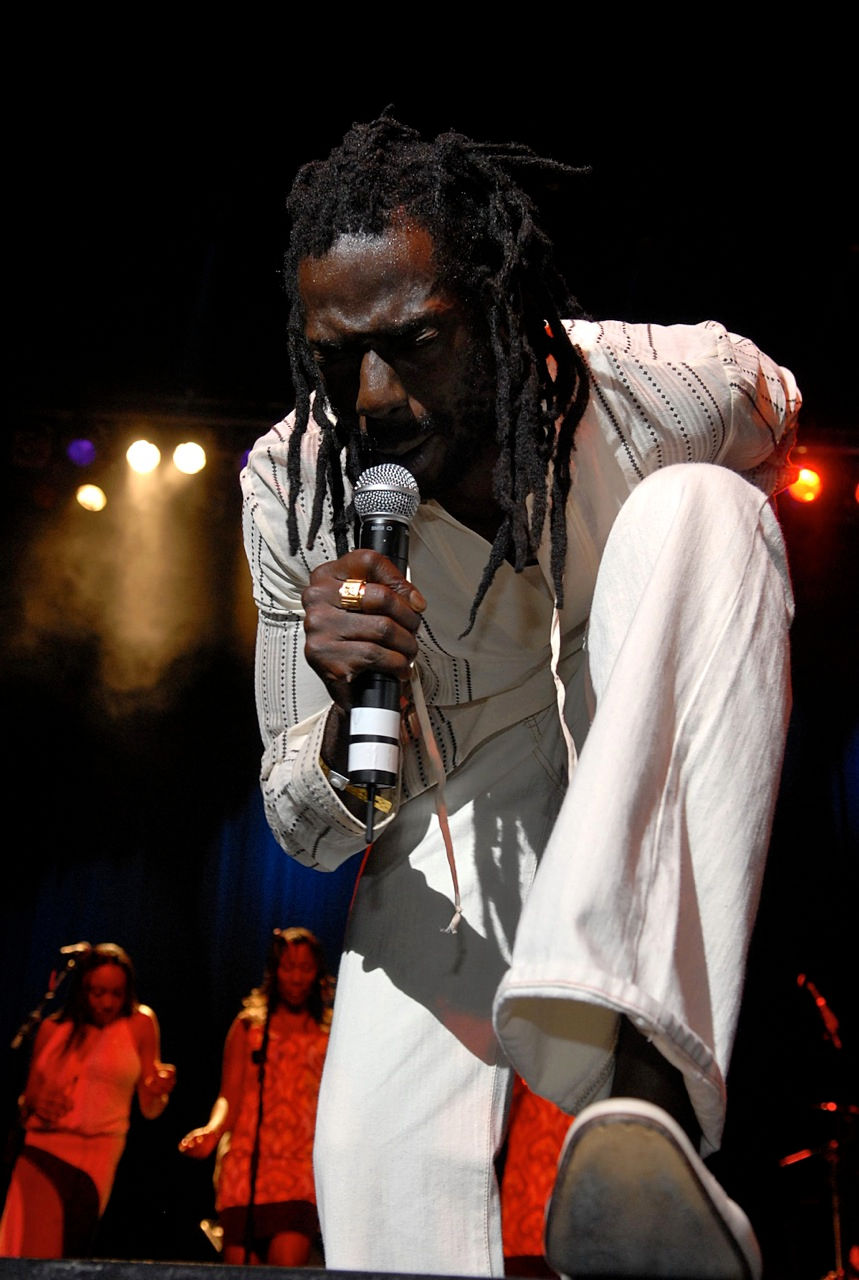
Photo 1: Buju Banton at EssenceFest 2025, photographed by Danielle G. Campbell; Wikimedia Commons, CC BY-SA 4.0. Photo 2: Buju Banton performing at the Apollo Theater in 2007, photographed by Gregg; Wikimedia Commons, CC BY 2.0.


Comments